Pochas a la Navarra
Anyone who has experienced the San Fermin festival will agree on two things: the people of Navarre know how to have fun, and they’re also brilliant cooks. Navarrese cuisine is full of delightful surprises, some of which are not very well known. Take the ‘pocha’, for example – a legume which, paradoxically, isn’t ‘pocha’ at all, as it’s actually a fresh white bean, harvested between July and September. It’s a product little known outside the regions of Navarre, Álava and La Rioja, but highly prized because, being so tender, it doesn’t need to be soaked overnight and has a smooth, pleasant texture. This stew is tasty, easy to make and very healthy, as it contains no animal fat whatsoever. It’s all pulses, vegetables and flavour. Let’s get started!
Serves: 4 people
Preparation time: Around an hour, perhaps a little longer.
Difficulty: None
You will need:
Serves 3
- 300 g of pochas
- 1 peeled tomato
- 1 green pepper
- 1 medium-sized onion
- 2 cloves of garlic, or to taste
- Flesh of a choricero pepper
- Two slices of fried bread
- Extra virgin olive oil
- Salt
How is it made?
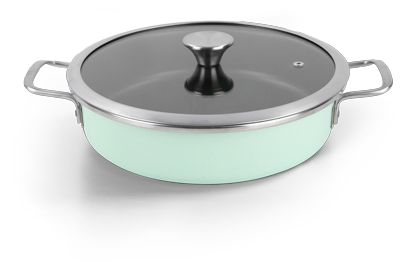
Such a special product deserves a good container. We recommend a wide, shallow cake tin, such as those in Vitrinor’s Nordic range.
First, the sofrito: coat the pan with oil and, once it’s hot, add the pepper, tomato, onion and one of the garlic cloves, all finely chopped. Stir, season and leave to cook over a medium heat for about 15 minutes.
When you see that everything is nicely softened, add the pochas – if you’ll pardon the repetition – and add water until it’s about a finger’s width above them. Leave everything to simmer for between 45 and 60 minutes. You won’t need to stir these pulses or anything; just leave them to their own devices whilst you carry on with the recipe.
In a mortar, crush the other clove of garlic, the fried bread and the flesh of the choricero pepper. About halfway through the cooking time (give or take a minute – it’s not an exact science), stir the crushed mixture into the stew. You’ll see what a lovely flavour it adds.
Now you just need to watch them a little until you check that they are well cooked without letting them fall apart, correct the salt if necessary, and enjoy. This type of stew is always tastier the next day, but we understand that when you have it in front of you, you won’t be able to wait to try it…