Baba ganoush
There are ingredients that seem to have been born to end up a certain way. And, although eggplant has many possible lives, becoming baba ganoush is undoubtedly among the best.
This cream of roasted eggplant, tahini, lemon, garlic, and olive oil was born in the Mediterranean Levant and, as with many great recipes from that part of the world, it has traveled wonderfully. Today it appears with slight variations throughout much of the Mediterranean and Middle East, forming part of that cuisine we share more than we sometimes think: vegetables, olive oil, seeds, lemon, bread in the center of the table, and dishes to share among everyone.
And it also has an important virtue: achieving a lot of flavor with very few ingredients.
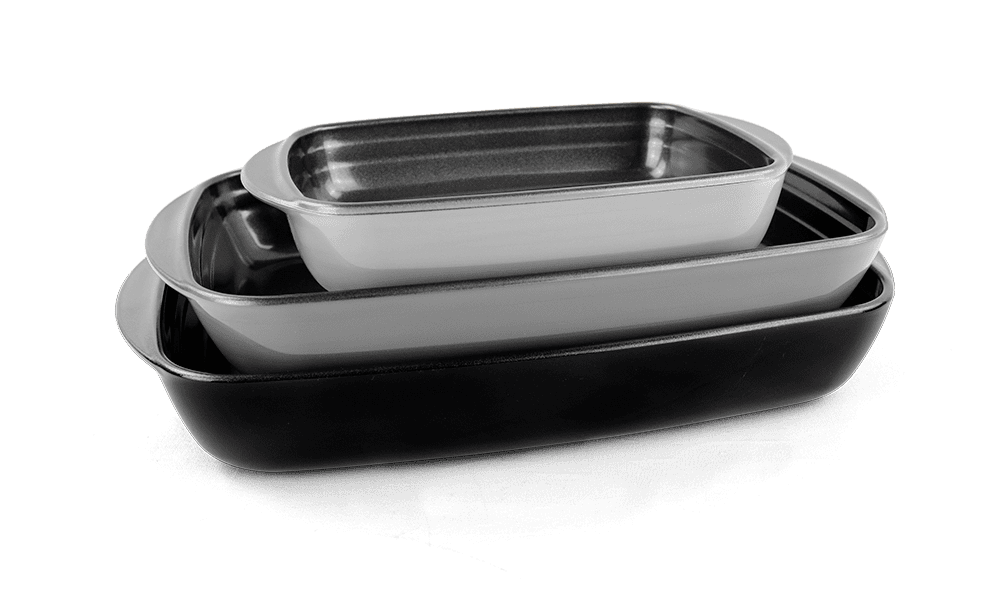
Servings: 4 people to sharePreparation time: 55 minutes, but the oven does most of the workDifficulty: very easyUtensils used: Vitrinor baking tray
You will need:
- 2 large eggplants
- 2 tablespoons tahini
- 1 clove garlic
- 2 tablespoons lemon juice
- 2 tablespoons extra virgin olive oil
- ½ teaspoon ground cumin
- Salt to taste
- Sesame seeds
Step by step
Preheat the oven to 200 ºC. Wash the eggplants well, prick them several times with a fork, and place them whole on a Vitrinor baking tray.
Bake them for about 40-45 minutes, turning them halfway through cooking. Don’t rush: we want the skin to be wrinkled and the pulp to be completely tender. The oven transforms the eggplant and gives it that deep, slightly toasted flavor that makes this recipe so different from a simple vegetable cream.
When they are ready, let them cool for a few minutes, cut them in half, and scoop out all the pulp with a spoon, discarding the skin.
Place the eggplant in a blender with the tahini, garlic, lemon juice, olive oil, cumin, and a pinch of salt. Blend until you get a smooth and homogeneous cream.
Taste and adjust salt or lemon if needed. Transfer the baba ganoush to a bowl, make small grooves on the surface with a spoon, and finish with a drizzle of good olive oil and some sesame seeds.
The great secret is in the eggplant
Baba ganoush is a recipe of Levantine origin, and traditionally the eggplant is cooked with high heat, even directly over a flame or coals, seeking that characteristic smoky flavor.
At home, the oven makes it much easier for us. The important thing is to let the eggplant really cook: it has to lose firmness, wrinkle on the outside, and become almost creamy on the inside. That point makes all the difference.
And what do we eat it with?
The most obvious is to serve it with pita bread or any good flatbread, but there’s no need to limit yourself. It works wonderfully with carrot, cucumber, or celery crudités, accompanied by falafel, alongside roasted vegetables, or as part of a snack table with hummus, olives, and salads.
You can also spread it on toast, use it as a base for a vegetable sandwich, or add a spoonful alongside grilled meats or vegetables.
Because few things suit an eggplant as well as ending up as baba ganoush.