
When cooking is child’s play
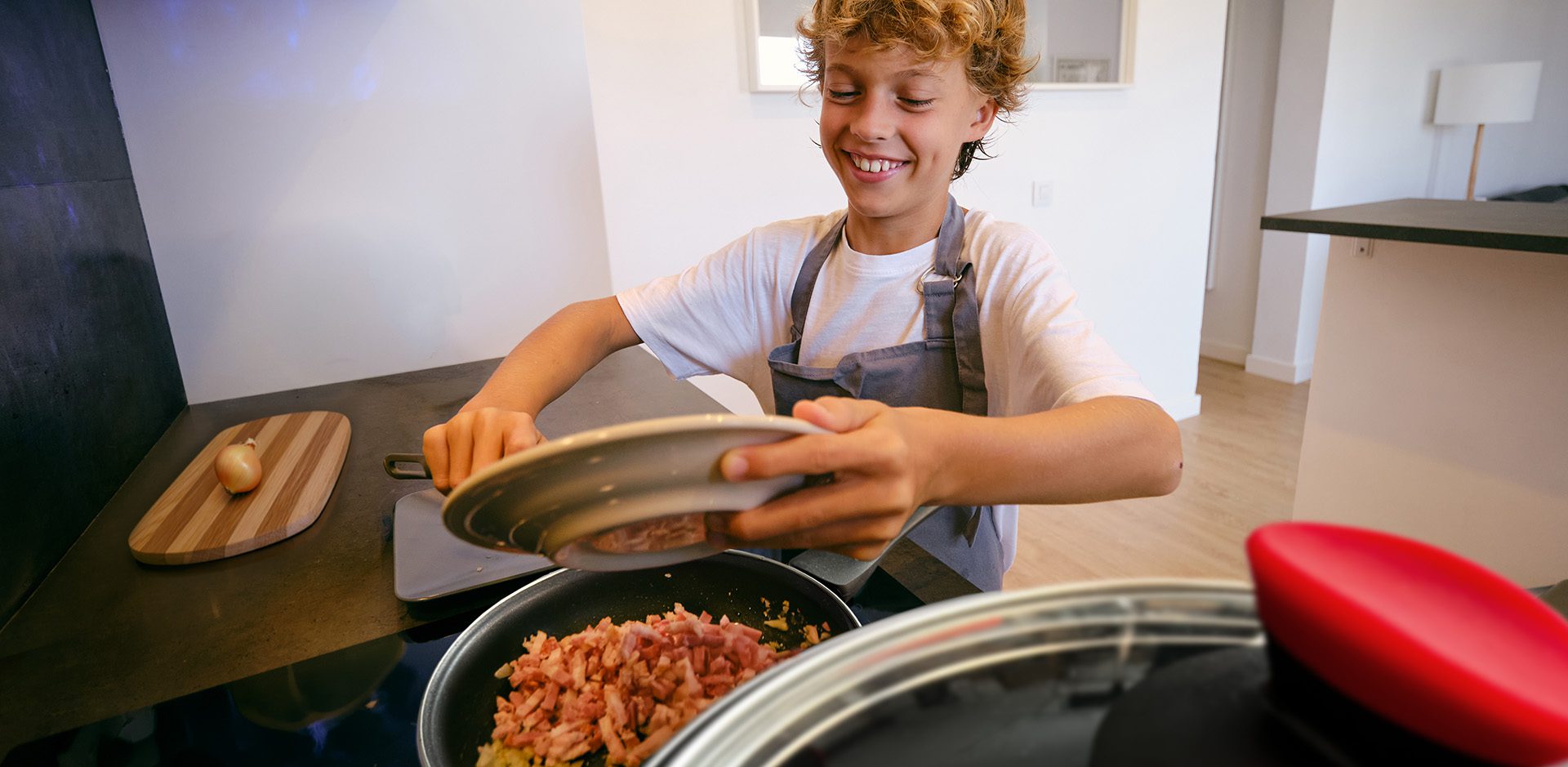
The calendar gives us dates that are etched in our memories for unexpected reasons. For many families, April 26, 2020, was one of those days: the date when the little ones stepped outside again after weeks of confinement. During those endless days within four walls, the kitchen became a refuge for many. Flour on their cheeks, the smell of cake in the oven, and the discovery that a simple vegetable purée can be an adventure if prepared with four hands.
That experience taught us something valuable: you don’t need an exceptional situation for the kitchen to be the heart of the home. Cooking with children is, arguably, one of the most beautiful and useful ways to share quality time, learning, and laughter. To celebrate Children’s Day, we invite you to rediscover why lighting the stove (with caution) is the best possible game plan.
Much more than entertainment: the benefits of cooking with children
Getting the little ones into the kitchen is much more than a way to keep them busy; the benefits of cooking with children go far beyond that. It’s a school of life camouflaged among pots and pans.
- Autonomy and confidence: seeing that they are capable of transforming raw ingredients into something delicious strengthens their self-esteem. “I did it” is a phrase with incredible power in their development.
- Practical learning: without realizing it, they review math (weighing quantities), science (seeing how food changes with heat), and vocabulary: there are so many words to discover in the kitchen…
- Fine motor skills: cutting with small hands (always under supervision), kneading, or shelling peas are excellent exercises for their coordination.
Cooking to eat better: the trick for healthy habits
It is proven that children are much more predisposed to try new foods if they have participated in their preparation. When cooking with children at home, broccoli stops being “the enemy” and becomes the ingredient they themselves have washed and placed in the pan. It is the most natural way to establish healthy habits in children without it seeming like an imposition.
Kitchen safety with children: the golden rules
For the experience to be a success and not a source of stress, safety is non-negotiable. Before you start, define the playing field:
- Safe zones: establish what they can touch and what they cannot. Fire and sharp knives are always adult territory.
- Hygiene, above all: the ritual of washing hands and putting on an apron is the starting signal that helps them understand that we are in a special place.
- Constant order: a clean kitchen is a safe kitchen. Teach them to clean up what they mess up and not leave anything in the way; that’s also part of the process.
Which techniques work best when cooking with children
Mixing, whisking, and stirring
These are very rewarding techniques because they make them feel part of the process from the very beginning. Plus, they allow participation without too much risk.
Kneading
Few things they like as much as getting their hands into dough. Pizza, cookies, rolls, or soft doughs are a great option because they invite touching, experimenting, and playing.
Assembling and decorating
Placing ingredients, decorating toast, distributing fruit, adding seeds, or finishing a recipe with a final touch usually works very well. It allows them to intervene in the dish in a visual and creative way.
Baking
Always with supervision, the oven has something almost magical for them: seeing how a mixture changes, rises, or browns helps them understand cooking as a transformation.
Cold or very controlled preparations
Simple salads, yogurts with fruit, wraps, skewers, or toast are perfect to start with. They allow for a lot of participation and reduce risks.
Where do we start? Recommended techniques and tasks by age
Not all tasks are for all ages, but there’s always something a child can do. Here are some ideas to make them feel like the chefs of the house:
For the little ones (2-4 years old)
At this age, direct contact is key. They can wash vegetables, shell legumes, tear lettuce with their hands, or mix dry ingredients in a bowl.
For medium-sized children (5-8 years old)
They can now use a table knife (round-tipped) to cut soft foods like bananas or mushrooms. They are also experts at whisking eggs, rolling out dough with a rolling pin, or assembling fruit skewers.
“Mini-chefs” (9 years and older)
They can start controlling cooking times, reading complex recipes, and, under supervision, begin using the griddle or ceramic hob for simple preparations.
Ideal recipes to make with children
The best recipes to make with children are those where they can see quick results and fun textures.
- Homemade pizzas: From kneading to choosing the “toppings”. It’s a guaranteed success.
- Meatballs or hamburgers: Shaping the meat (or its plant-based version) is pure tactile fun.
- Potato gnocchi: A recipe of patience and flour that they love.
- Simple baking: Cookies or yogurt cakes are perfect for learning to measure and wait for the right baking point.
Tips for cooking with children
So that cooking with your children doesn’t end in a three-hour general cleanup, apply these practical tips:
- Accept the mess: There will be flour on the floor and a stain on a t-shirt. It’s okay. The goal is to enjoy, not aesthetic perfection.
- Prepare the ingredients (Mise en place): If you have everything weighed and measured before calling the children, you will avoid moments of impatience.
- Choose the right moment: Don’t try to cook with them on a Tuesday at eight in the evening when everyone is tired. Reserve the activity for a Saturday morning or a rainy afternoon.
Cooking together also leaves a mark
Cooking with children is not about producing perfect dishes or turning every afternoon into a magazine activity. Rather, it’s about opening a door for them. To curiosity, to autonomy, to a kinder relationship with food, and also to those small shared moments that are later remembered with more affection than expected.
Amidst sticky doughs, licked spoons, vegetables that are actually tried today, and a countertop that needs a wipe-down afterwards, important things also happen. You learn, you share, and you enjoy. And that, deep down, is already a pretty good recipe.
