
How to Choose the Right Pan Diameter: A Practical Guide for Your Kitchen
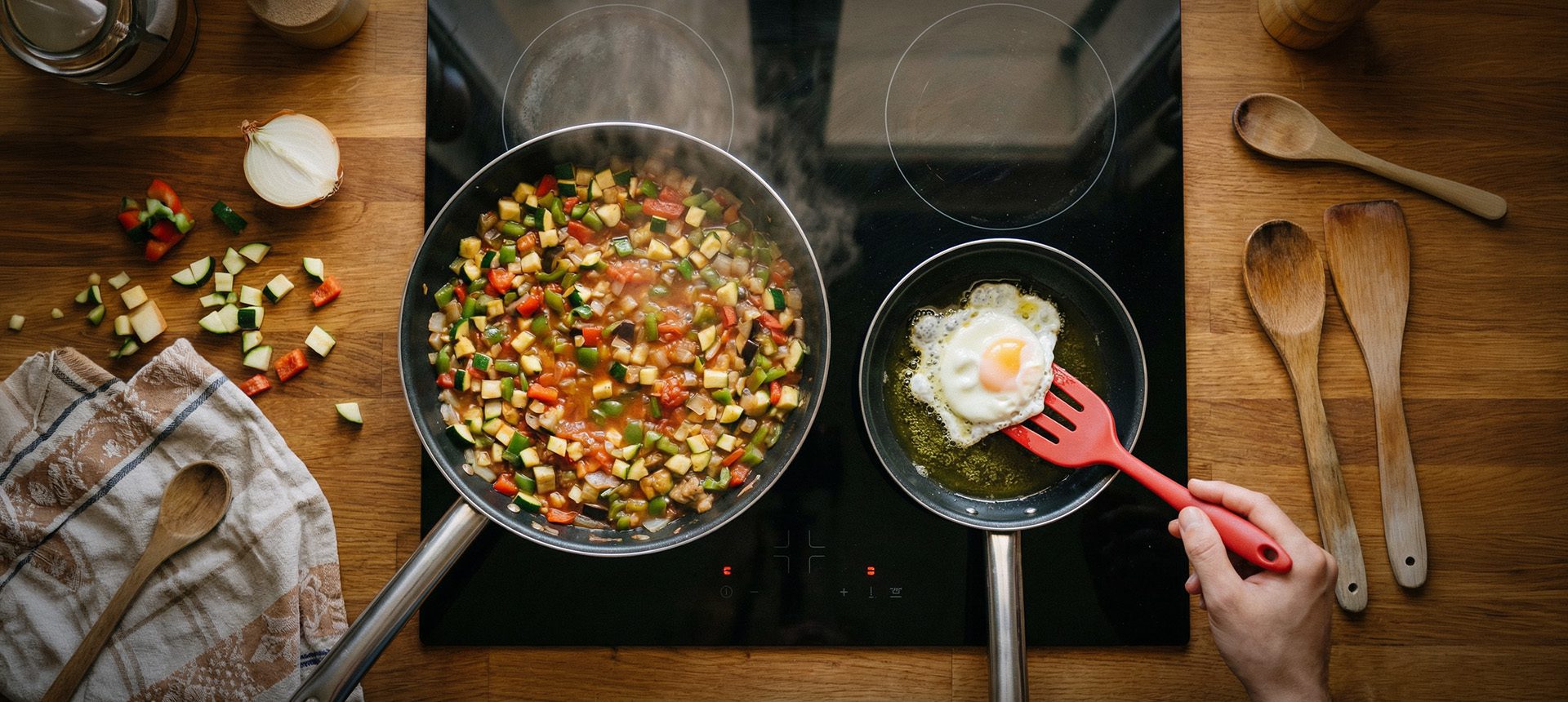
Choosing a frying pan isn’t just about the material or coating type.
The diameter directly influences how you cook, the outcome of your recipes, and your daily convenience.
A pan that’s too small forces you to cook in batches. One that’s too large can be inconvenient or inefficient for small quantities. Understanding what each size offers helps you make informed decisions and build a set of pans tailored to your cooking style.
What Does Pan Diameter Mean?
The diameter shown on the label is usually measured across the top, from rim to rim. However, the base—the area that contacts the hob—is slightly smaller.
This detail is important, especially for induction hobs, where it’s best for the base size to match the cooking zone as closely as possible. A good match improves efficiency and heat stability.
Why Does Size Affect the Outcome?
Diameter affects three fundamental aspects:
- Actual cooking capacity: how much food you can cook without overcrowding.
- Evaporation: more surface area allows moisture to disperse better.
- Browning: the more space ingredients have, the better they sear and brown.
When food is too crowded, it releases water and steams rather than sautés. Choosing the right size helps avoid this effect.
Guide by Diameter: When to Use Each Size
18–20 cm Frying Pan
Ideal for small preparations.
It’s lightweight, easy to handle, and heats up quickly. Very practical for individual portions or small dishes.
Recommended for:
- Fried eggs or French omelets
- Scrambled eggs
- Sautéing small quantities of vegetables
- Heating sauces
In one or two-person households, it’s often used frequently.
22–24 cm Frying Pan
The most versatile size.
This is the most balanced diameter for everyday use. It allows you to cook for two or three people without overcrowding ingredients.
Recommended for:
- Medium omelets
- Chicken breasts, burgers, or fish
- Complete stir-fries
- One-pan recipes
If you’re looking for a multi-purpose pan, this size is usually the best choice.
26 cm Frying Pan
Designed for families and generous recipes.
It provides enough surface area to cook several items at once without losing browning capacity.
Recommended for:
- Large omelets
- Generous stir-fries
- Searing meat in multiple batches
- Soffrittos for stews
For families of three or four people, this diameter is very convenient.
28–30 cm Frying Pan
For cooking in quantity.
This is the right option when cooking for several diners or when preparing dishes that require ample space.
Recommended for:
- Dry rice dishes or large recipes
- Large vegetable stir-fries
- Preparations that need space to evaporate liquids
It’s advisable to check that your hob’s cooking zone is compatible and that the weight is manageable.
How to Choose the Right Diameter for You
Before deciding, consider:
- Usual number of diners
- Types of recipes you cook most often
- Size and layout of your hob
- Available storage space
- Comfort when handling large items
Not all kitchens need the same set. A person living alone who cooks quickly daily has different needs than a large family preparing full meals.
Is one pan enough?
In practice, no. Each diameter is better suited for certain situations. Having a set of pans of different sizes allows you to choose the right one depending on the recipe and the moment.
A balanced combination usually includes:
- A small pan (20 cm)
- A medium pan (24 cm)
- A large pan (26 or 28 cm)
This covers everything from individual preparations to family meals without always forcing the same utensil.
Conclusion: Size Matters Too
The diameter of a frying pan influences heat distribution, browning, and cooking convenience. Choosing the right size means cooking with more control and achieving better results.
Having different diameters isn’t about accumulating cookware, but about adapting your kitchen to your habits, techniques, and the size of your table. When the utensil matches the recipe, everything becomes simpler.
