
Griddle Tips
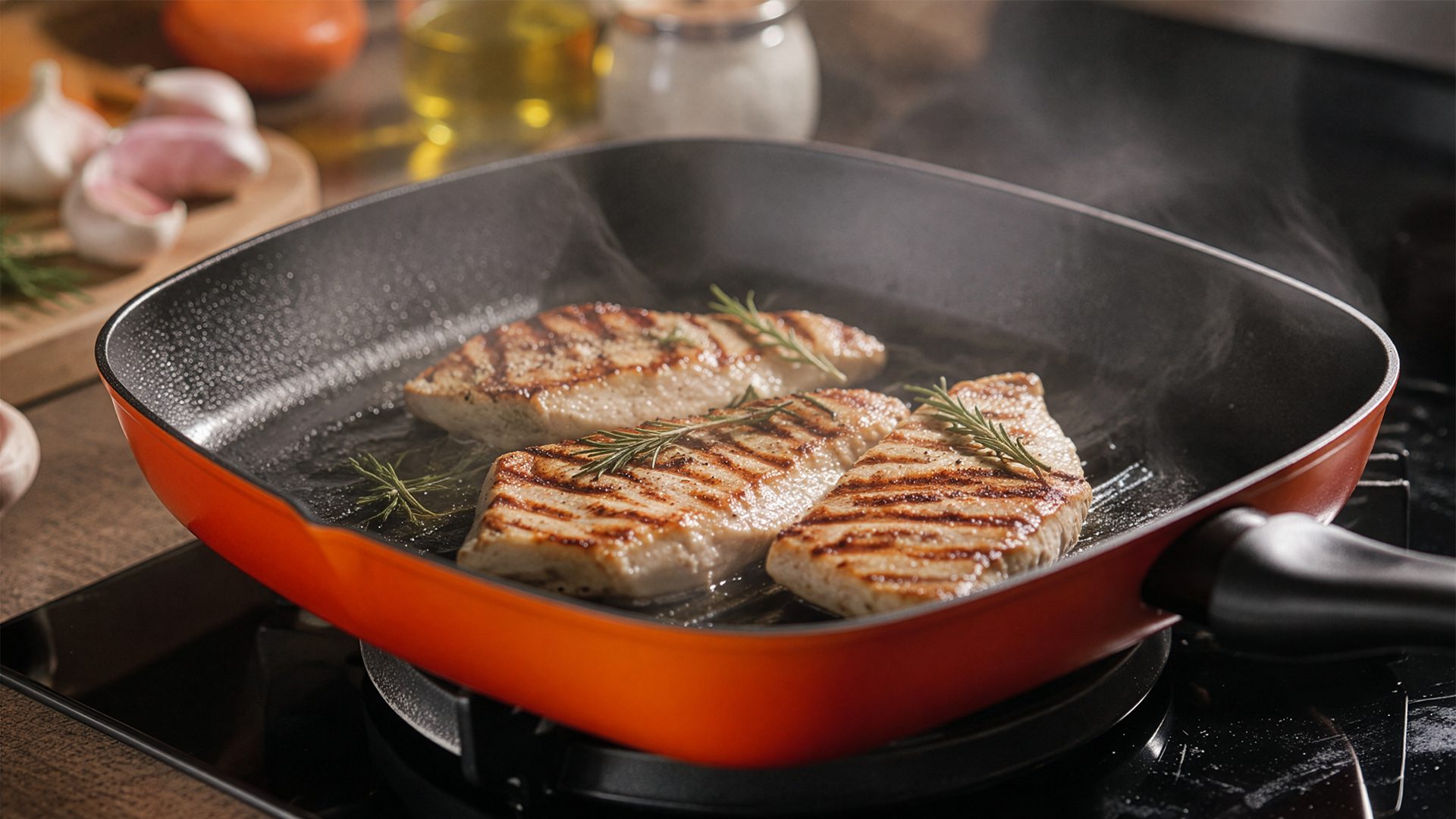
The ultimate guide to perfect browning (without anything sticking)
Grilling is much more than “diet food”
For too long, we’ve been sold griddle cooking as a punishment: the typical dry chicken breast, a whitish and sad hake fillet, or boiled vegetables that no one fancies. We associate it with when we have an upset stomach or when we go on a strict diet. However, the reality in the kitchen is totally different.
When well executed, griddle cooking is one of the most powerful, versatile, and rewarding techniques in gastronomy. It’s fast, barely makes a mess, takes care of your health, and, above all, enhances the natural flavor of food like few other things. Achieving that golden, crispy, and tasty outer layer, while maintaining a juicy and tender interior, is not a matter of luck nor does it require being a Michelin-starred chef. You just need to understand a couple of basic details about heat and lose your fear of the pan.
A bit of history: from hot stones to beach bars and your home
Griddle cooking is, literally, as old as civilization itself. Our ancestors didn’t have pans, but they soon discovered that placing flat stones directly over embers allowed them to roast meat and fish in their own juices without burning them in the ashes.
Over the centuries, these stones evolved into the heavy cast-iron griddles that triumphed in seaside taverns, beach bars, and traditional kitchens. There, the famous grilled prawns or cuttlefish with garlic and parsley that we all remember were prepared.
Nowadays, you don’t need to build a campfire or have an industrial kitchen at home. Modern pieces of vitrified steel or lightweight aluminum distribute heat quickly and evenly. This allows us to replicate that traditional bar-style roasted flavor in a matter of minutes, using a drop of oil and without filling the kitchen with smoke.
The chemistry of griddle cooking without fancy words
To make meat, fish, or vegetables spectacular on the griddle, a couple of magical things have to happen as soon as the ingredient touches the hot surface.
The famous Maillard Reaction (or the secret to delicious browning)
Behind this scientific name lies the greatest secret of flavor in cooking. When proteins and natural sugars in food exceed 140 °C, they begin to transform. That golden, shiny crust that appears on the surface of a hamburger or a zucchini slice is not just toasted: it’s a range of new aromas and caramelized nuances that make food irresistible.
Searing and the trick to juiciness
When food is placed on a very hot cooking surface, the outer layer seals almost instantly. This thermal shock creates a kind of “shield” or natural barrier that prevents internal moisture from escaping. The result? A piece that’s toasted and firm on the outside, but incredibly juicy on the inside. If the griddle is lukewarm, the water escapes little by little and the food dries out.
The big mistake: “boiling” instead of browning
Has it ever happened to you that you put some mushrooms or pork loin fillets in the pan and, suddenly, it fills with bubbling liquid? That happens because the surface wasn’t hot enough or because you put too much food in at once. Instead of browning with the heat of the metal, the ingredients boil, trapped in their own steam.
Which piece of cookware to choose depending on what you’re going to cook?
Not all griddle recipes call for the same tool. Choosing the right cookware makes the difference between a perfect dish and a small frustration.
The all-purpose non-stick pan
It’s the wildcard in any kitchen. It’s essential for delicate foods that tend to stick or break easily: thin fillets of white fish (like hake or sole), eggs, omelets, pork loin fillets, or thin vegetable slices. A quality non-stick coating allows you to cook practically without adding fat and wash the pan in ten seconds.
The ridged roaster or grill pan
The undisputed favorite for more substantial pieces: thick-cut steaks, whole chicken breasts, hamburgers, offal, or thick vegetables like asparagus and eggplants. The grill’s distinct ridges or grooves are not just decorative: they elevate the food so that excess fat or juice drains to the bottom, allowing the food to roast by direct contact on the crests without actually frying.
The shallow casserole or low pot
Thanks to its wide flat base and slightly raised edges, it’s ideal when you need to prepare food for several diners at once. It’s great for searing seafood (prawns, langoustines, cuttlefish), making various skewers, or browning large pieces that you then want to cover for a couple of minutes over low heat so they finish cooking through with their own steam.
The 7 commandments for perfect griddle cooking
If you apply these small habits to your routine, you’ll see your dishes make a huge leap in quality:
- Always preheat thoroughly: never add food to a cold or lukewarm pan. Turn on the heat a couple of minutes beforehand. An easy trick: drop a tiny bit of water; if it dances like a small pearl on the surface, the griddle is at its perfect temperature.
- Dry the ingredient well: before placing meat or fish on the heat, pat them with a bit of absorbent kitchen paper. If the surface is wet, that water will have to evaporate first, delaying browning and steaming the food.
- Oil, directly on the food: instead of pouring a puddle of oil onto the pan (which will end up burning and smoking), brush or spray a thin film of oil directly onto the piece you are going to cook.
- Don’t overcrowd the space: give ingredients room. It’s preferable to cook in two batches than to fill the griddle to the brim. If you overload it, the metal’s temperature will plummet, and you’ll lose the browning effect.
- Patience and the “single touch” rule: place the piece and leave it alone. Don’t move it, don’t press it with the spatula (that only serves to squeeze out its juices), nor bother it by flipping it a thousand times. If you try to flip it and notice it’s sticking, don’t force it: leave it for another half minute; the golden crust itself will make it release on its own.
- The right moment for salt: for red meats and thick steaks, add coarse or flake salt just as you flip them or when taking them off to the plate. If you add it before starting, the salt will draw water out of the meat. With vegetables, however, a pinch of salt at the beginning helps them soften faster.
- Beware of thermal shock: when you finish cooking, do not place the hot pan directly under cold tap water. That sudden change in temperature deforms the metal and damages the non-stick coating. Let it cool down on its own before washing it with a soft sponge.
Much more than chicken breast: creative ideas for variety
If you want to break free from monotony, try grilling ingredients not normally associated with this technique:
- Seasonal vegetables: wild asparagus, sliced artichokes, or pumpkin slices seared at high temperature with a touch of coarse salt and a drizzle of extra virgin olive oil.
- Cheeses with character: thick slices of provolone, halloumi, or goat cheese. One minute per side over high heat creates a crispy crust on the outside while the inside becomes creamy.
- Juicy seafood: clean cuttlefish or squid. The secret is to cook them over very, very high heat for barely two minutes so they remain tender and not chewy, finishing with chopped garlic, parsley, and lemon when turning off the heat.
- Caramelized fruit for dessert: grilled pineapple, peach, or ripe banana slices. The heat intensifies their natural sugars and they are spectacular to accompany pork dishes or to serve warm with a scoop of vanilla ice cream.
Make the most of your daily life (without kitchen fuss)
Ultimately, mastering the iron is all about overcoming your fear, giving time to the ingredients so that they can brown and trusting in a good frying pan that distributes the heat without any surprises. It’s the cleanest and most straightforward direct and tasty way to prepare a quick lunch or an dinner impromptu one without having to spend hours cleaning up the crockery.
And at your home, how do you do it? Are you one of those who stir the meat by turning it round and round, or do you prefer to let let the frying pan do its job in peace?
