
Manifesto of the Zen kitchen
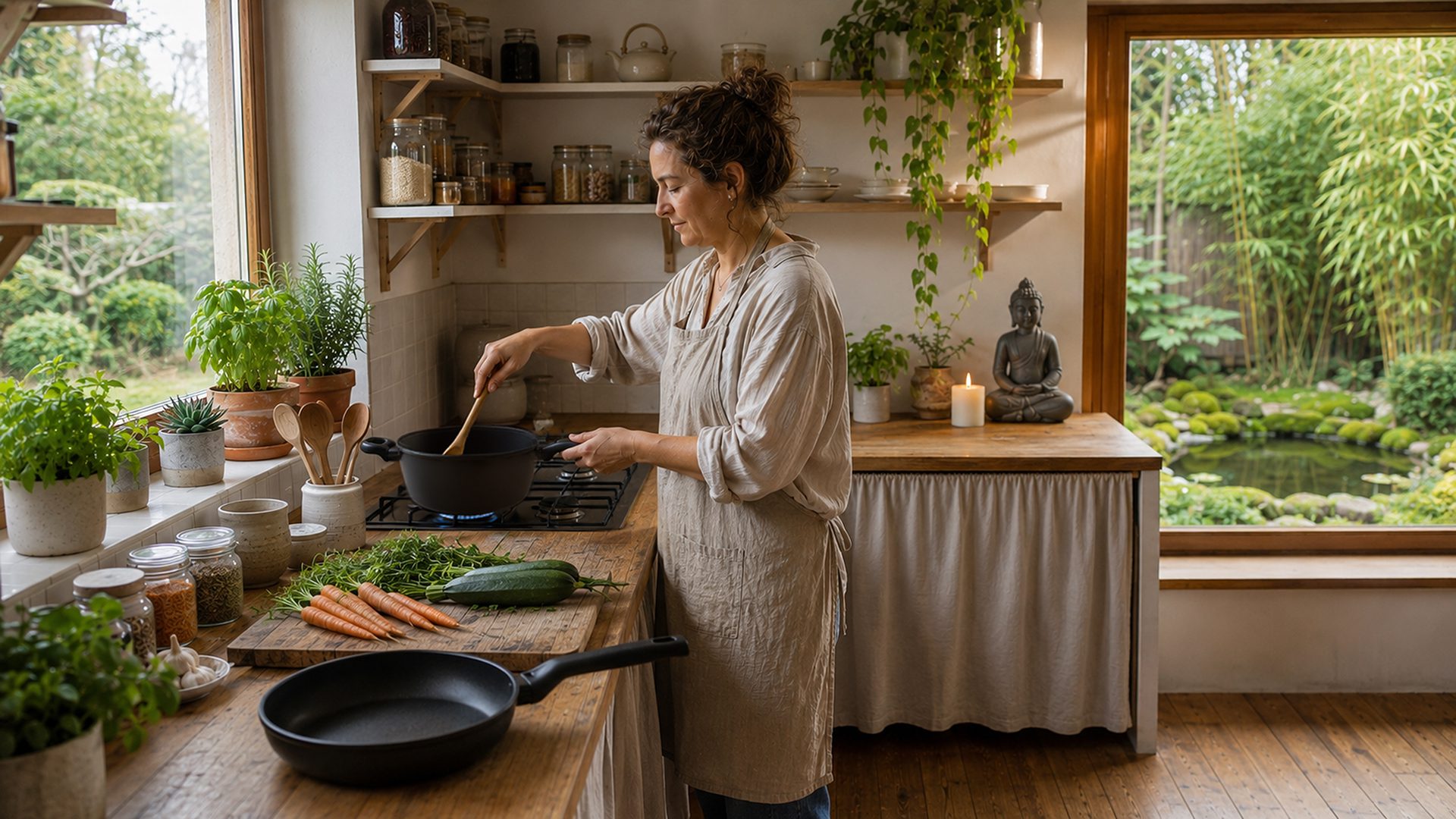
Breaking the myth of the “nightmare” kitchen
August 15th is World Relaxation Day, a great day to remember that we need to slow down a bit. The problem is that when we think about cooking, we all think of TV shows: chefs shouting, clocks ticking and people stressed out as if the world were ending.
It seems that to cook, you have to be tense or take an exam. But the reality at home should be very different.
We prefer to see the kitchen as a refuge. That corner of the house where you put your phone away, turn off work notifications and give yourself some time for yourself. Turning on the stove doesn’t have to be another obligatory task to get over with in a hurry. It can be, simply, your best moment of the day to disconnect.
Cooking therapy: what you feel when you get stuck in
What experts call Mindful Cooking or conscious cooking is nothing more than using your hands to clear your head. There’s no need to get mystical: when you start cooking calmly, your mind relaxes almost without you realizing it.
Focus on what you’re doing
When you concentrate on chopping an onion, stirring a sauce, or controlling the heat, your mind stops dwelling on everything else. It’s an automatic break. Those work worries or the to-do list that are buzzing in your head stay out of the kitchen while you’re doing your thing.
The satisfaction of seeing the result
In many jobs, you spend weeks to see a result. Not in the kitchen. You combine three vegetables in a pan and in twenty minutes you have a delicious dish made by you. It’s something tangible, easy, and direct that gives a very pleasant rush of satisfaction.
An experience for the five senses: connect with what you do
Cooking is one of the few everyday things that make you use all your senses at once. When you put the rush aside, preparing dinner becomes a great exercise for being present:
Feel the process step by step
- The ear: that soft “chup-chup” of a stew simmering is one of the most relaxing sounds there is.
- The sight: seeing how vegetables change color as they soften or how food browns in the pan.
- Touch: feeling the freshness of the ingredients, chopping at your own pace or adding a pinch of spices with your fingers.
- The sense of smell: the aroma of sofrito that begins to fill the kitchen. It’s the true smell of home and of good things.
- Taste: try the sauce, adjust the salt, and enjoy the flavors before bringing the dish to the table.
7 simple gestures for stress-free cooking
If you want cooking to be your moment of peace during the day, these small details help a lot:
| Zen Gesture | How to put it into practice? | The benefit for your mind |
| 1. Take a breath for a moment | Stand still for ten seconds in front of the kitchen turned off and take a breath. | You mark the change in mindset amidst the hustle and bustle of the day and your moment of rest. |
| 2. Prepare everything beforehand | Chop and have ingredients at hand before turning on the heat. | You avoid rushing at the last minute or burning something while looking for a jar. |
| 3. Put on your music | Play a playlist of calm songs or a podcast you like. | You choose the atmosphere and make the moment all yours. |
| 4. Put away your phone | Leave your phone in another room or on silent. | You get rid of notifications and messages that only create noise. |
| 5. Taste without rushing | Smell the steam and slowly taste the food. | You enjoy cooking while you do it, not just when you sit down to eat. |
| 6. It’s okay if it fails | If something is a bit overcooked or doesn’t look pretty, laugh it off and move on. | You’re not in a competition. The important thing is to enjoy the moment. |
| 7. Clean as you go | Wash the big items while the food simmers. | When you finish, you don’t have a mountain of dishes waiting for you, and the calm lasts longer. |
Goodbye to chaos: easy tricks to avoid stress
For kitchen-therapy to work well, you only need a little common sense:
- Clear countertop: if you work in a clean space, your mind clears just as quickly. Picking up a few things before starting completely changes the feeling.
- No obsessions: don’t get stuck on the recipe. If you’re missing an ingredient, swap it for another or improvise. Home cooking is for playing around.
- The charm of slow cooking: recipes that take their time are the best for this. A stew needs time, but hardly any work from you. You put it on the stove and it leaves you free to read for a while or chat quietly while it cooks itself.
Tools that help
Many times we get stressed in the kitchen out of pure frustration: the pan where everything sticks, the pot that burns the bottom at the slightest provocation, or that saucepan that’s a nightmare to clean.
That’s where good cookware helps. At Vitrinor, we make pots and pans with exactly that in mind: to save you headaches. Knowing that the heat distributes well, that ingredients don’t stick, and that it washes up in a moment gives you enormous peace of mind. When you know your pans deliver, all you have to worry about is enjoying your sofrito.
Your kitchen, your rules
In your home kitchen, there are no judges, no imposed rush, no certifications. It’s your space, and you set the rules. This World Relaxation Day, we suggest something very simple: put on your apron, turn the heat down low, and treat yourself to that little moment of peace that feels so good.
