
Africa, cooking from deep roots
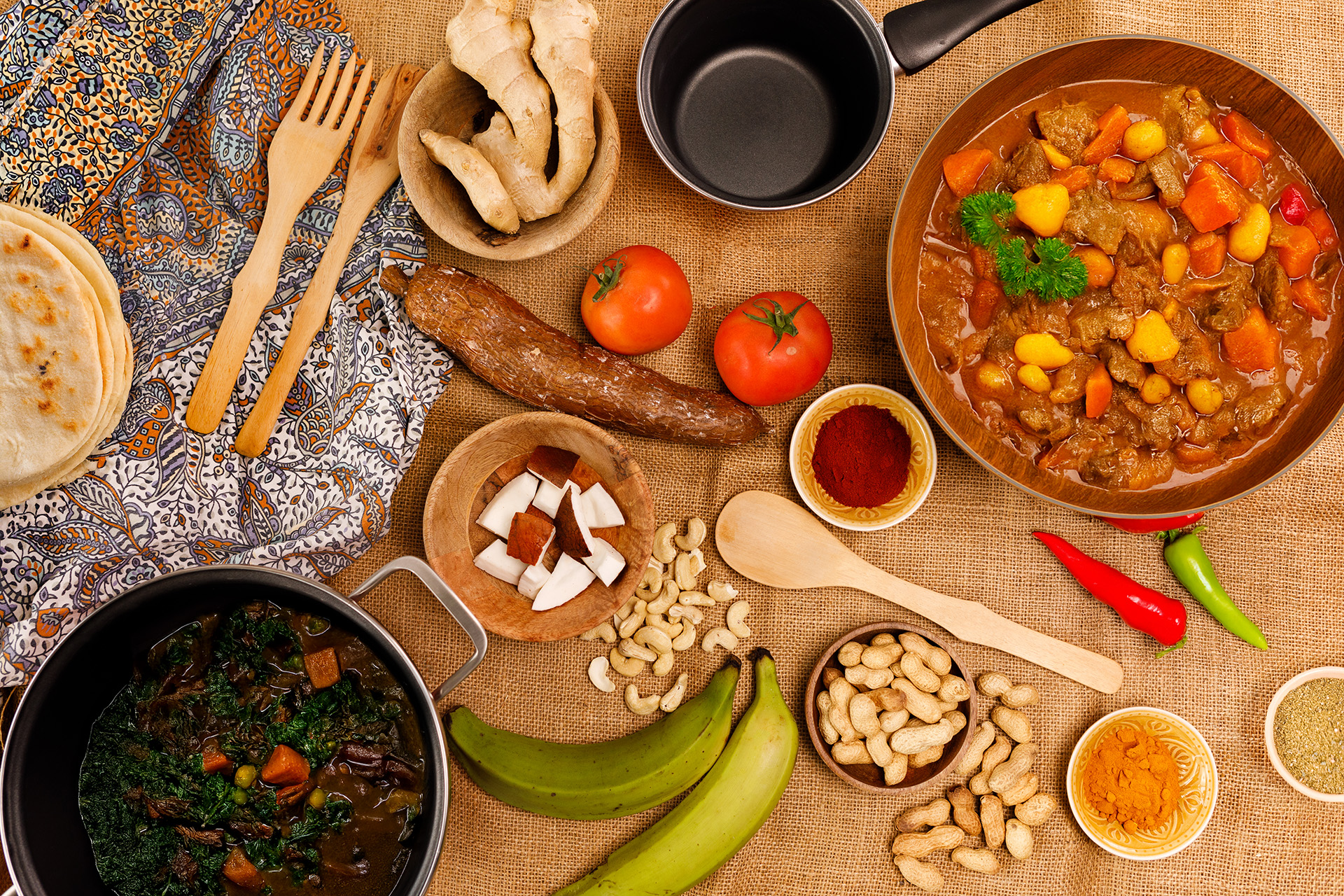
An ancestral, diverse cuisine with so much to discover.
Today we celebrate World African Culture Day, and what better way to do it than by getting closer to its most authentic flavours. Talking about African cuisine is talking about history, land and community. It’s a gastronomy deeply connected to its environment, climate and way of life, where cooking isn’t just about nourishment, but about sharing, caring and passing on knowledge. Although for years it has been largely unknown in Europe, African cuisine is one of the richest, most varied and surprising in the world. Talking about African cuisine is talking about history, land and community. It’s a gastronomy deeply connected to its environment, climate and way of life, where cooking isn’t just about nourishment, but about sharing, caring and passing on knowledge. Although for years it has been largely unknown in Europe, African cuisine is one of the richest, most varied and surprising in the world.
And yes, it also breaks more than a few stereotypes. Because it’s not all extreme heat or impossible recipes: there are gentle stews, deep flavours, humble ingredients and techniques that are as ingenious as they are practical. In this journey we focus especially on Sub-Saharan African cuisine, a gastronomy with deep roots and much to teach us. It is closely tied to local agriculture and community life. Dishes are usually hearty, designed to nourish, comfort and be shared around a table — or a large communal pot. Because here, eating together isn’t an option: it’s the rule.
Essential ingredients: what’s cooked there (and we barely use here)
The African pantry is simple but powerful: millet and sorghum are resilient grains turned into nourishing porridges, ideal for providing energy in harsh climates; yam and cassava form the base of filling dishes like purées or fufu; peanuts aren’t just eaten roasted, they’re the soul of creamy sauces; and plantain is grilled, boiled or fried to accompany almost everything. These ingredients aren’t random choices: they’re nutritious, energising and designed to make the most of what the land provides, with a community-focused approach where cooking is done for many.
Ancestral techniques: cooking with time and ingenuity
In Sub-Saharan Africa, cooking is an art of patience and resourcefulness. Long, slow-cooked stews in large clay or iron pots allow flavours to meld without haste; underground cooking, wrapping food in banana leaves over embers, is a ritual that concentrates intense aromas; and wooden mortars are used to grind spices and peanuts to achieve perfect textures. Everything revolves around making the most of what’s available: nothing is wasted, fire is mastered, and sturdy pots are the heart of everyday cooking.
Must-try African dishes (short list)
Jollof rice: spiced rice with tomato, peppers and onion, a festive West African classic that sparks friendly rivalries over heat and flavour.
Mafé: a creamy meat or vegetable stew in peanut sauce, mild yet addictive, from Senegal and Mali.
Injera: Ethiopian fermented flatbread made from teff, tangy and spongy, perfect for scooping up spicy stews.
Yassa: chicken or fish marinated in onion, lemon and mustard, originally from Senegal, with an irresistible acidic balance.
Fufu: a thick purée of cassava or yam, a neutral base from Ghana and Nigeria to pair with bold sauces.
A cuisine with global reach
African cuisine didn’t stay at home: it crossed oceans with migration — unfortunately, not always voluntarily — and left its mark on the world. In the Caribbean and Latin America, plantain and peanut sauces echo its roots; in the southern United States, soul food with greens and spiced stews carries its DNA; and even in Brazil, feijão tropeiro evokes those earthy flavours. It’s a legacy of cultural exchange, where the African diaspora carried not only ingredients, but techniques and the spirit of cooking to bring people together.
African cuisine invites you to be bold at home: adaptable, full of stews that practically cook themselves in a good, sturdy pot, and perfect for experimenting with new spices and textures. You don’t need to travel to feel its warmth: with a bit of curiosity, your kitchen can become a corner of Africa, where every dish tells a story of roots, flavour and the magic of sharing. Dare to try an African recipe — and if it doesn’t turn out perfectly at first, you already know… Hakuna Matata!
